Ways

It is my own limitations that make me see things the way my truth commands me. And so they are true for me. Another may recognize a different truth than I do – this means for me to allow him his way, because recognition always takes place in an individually different way.
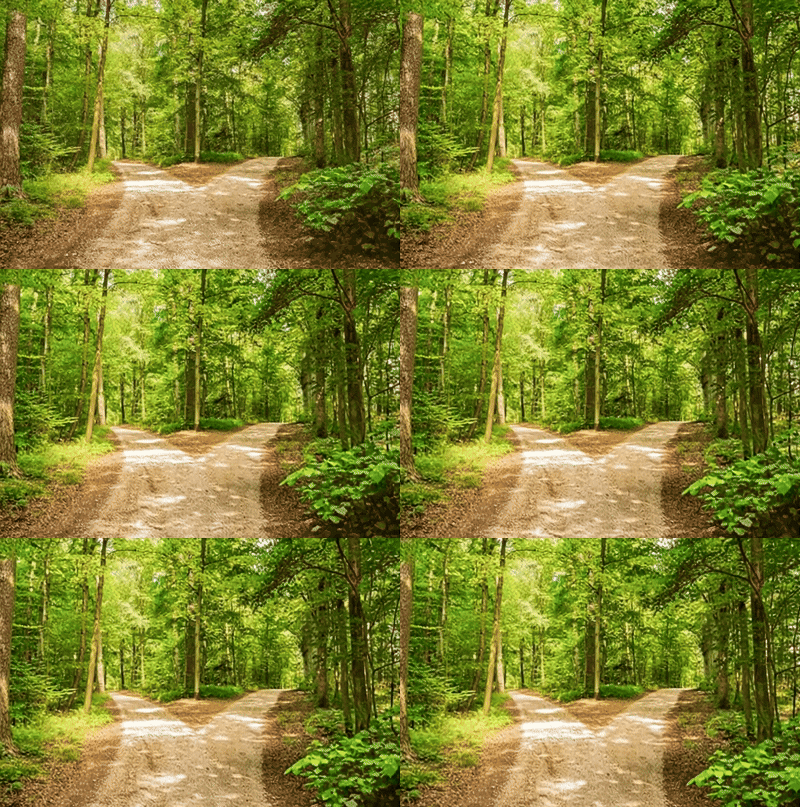
Our view of the world is based on our experiences,which we have experienced and sensed in our individual being. Truth is the goal and we are not squeamish when choosing the means to get closer to that goal. We all troll through life and recognize our paths as the (perhaps?) only possible ones, because sometimes only we ourselves can explain our thoughts, words and actions.
Sometimes it is not easy to explain to others our motivations and the conclusions we draw from them; often our efforts end in an exchange of blows. In my experience, the best way to avoid this dilemma is to focus on your real goal. This memory for us, brought to life and made flesh, represents divine peace.

The practical way to put our striving for truth into practice in a way that is beneficial for us is tolerance. Tolerance does not include the motive of that indifference which is of resigned origin. Rather, tolerance for me means to examine the motivations and decisions of another being in order to see whether I can benefit from recognizing the other. In this way, blind following is avoided, as is selfish insistence on one’s own point of view.
We all live in the light and all our beings are made up of it.
Originating from one of our two basic motivations in experiencing our being (love and fear), the path ahead of us is formed. Every day. In every moment of our being. We experience ourselves as changeable beings and this fact makes us doubt and hesitate. This in turn results in the uncertainty about our being, which makes us appear to others to be judgmental, cautious or even rejecting.
In the recognition of our incompleteness on our paths lies the wisdom that brings us closer to the light. For the last shall be first, and it is only a supposed lack that makes us experience our true nature. When we love unconditionally, we are indifferent to whether a serious illness may disfigure the body of the loved one. It is in the recollection of the power of love dwelling in us all that we experience our healing. One expression of this is forgiveness. Our disputes are therefore based on our incomplete recognition and are – despite some ill fortune – powerful signposts on our paths to salvation.
Nevertheless it is true:
„Right opinion is born from another’s voice and one’s own reflection.“
Gautama Buddha
„Little children – love you!“
Friedrich Nietzsche